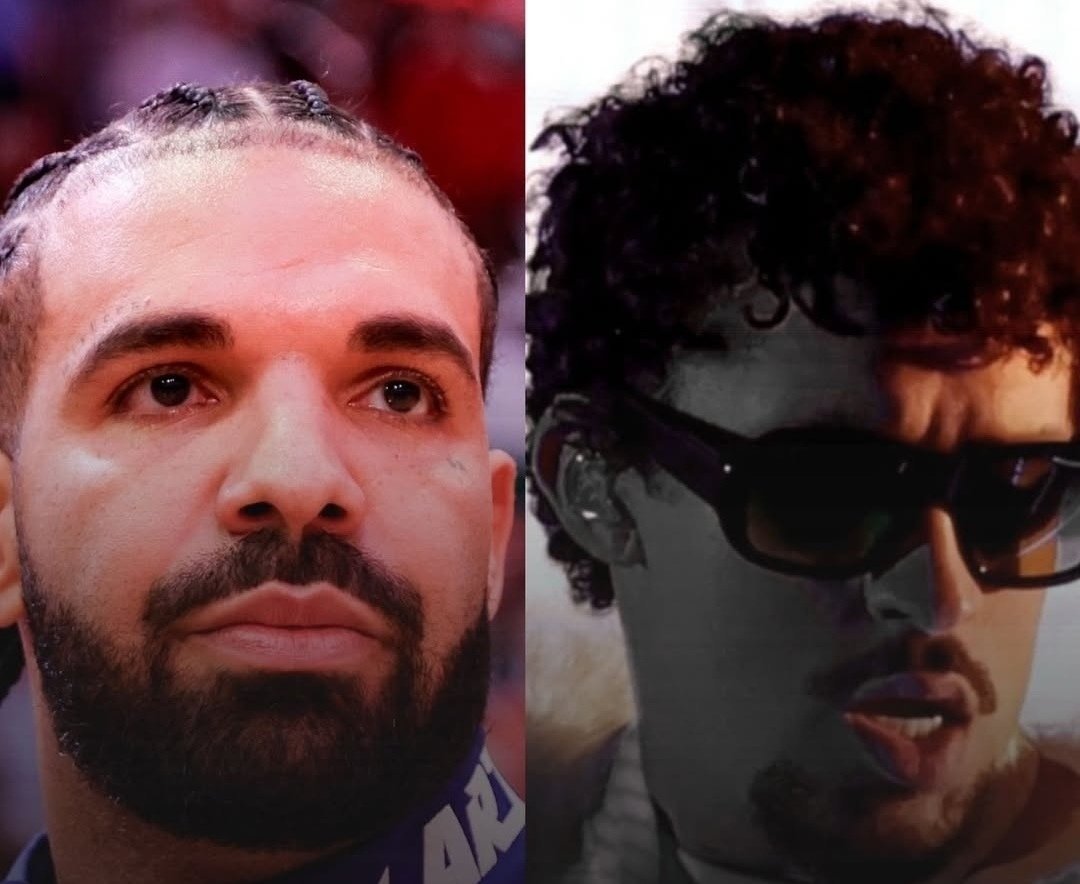
Drake reportedly declining an invitation to join Bad Bunny on the Super Bowl halftime stage has quietly become one of the most talked-about cultural decisions in recent music history — not because of what happened, but because of what deliberately did not.
In an era where surprise guest appearances are engineered for viral dominance, Drake’s absence resonated just as loudly as any performance could have. According to reports, the global rap icon was invited to appear during Bad Bunny’s Super Bowl halftime show, only to respectfully decline, choosing instead to let the spotlight remain entirely on Benito.
The decision immediately ignited conversation across music, sports, and pop culture spaces. Was it a rare act of restraint rooted in respect, or a missed opportunity for one of the most powerful crossover moments the Super Bowl stage has ever seen?
The Super Bowl Halftime Show as a Cultural Stage
The Super Bowl halftime show has evolved far beyond entertainment. It now stands as one of the most influential cultural platforms in the world — a space where identity, representation, and global influence converge in front of hundreds of millions of viewers.
In recent years, halftime performances have become cultural statements rather than standalone spectacles. Every creative decision carries symbolic weight, from song selection to visual storytelling — and especially who is invited onstage.
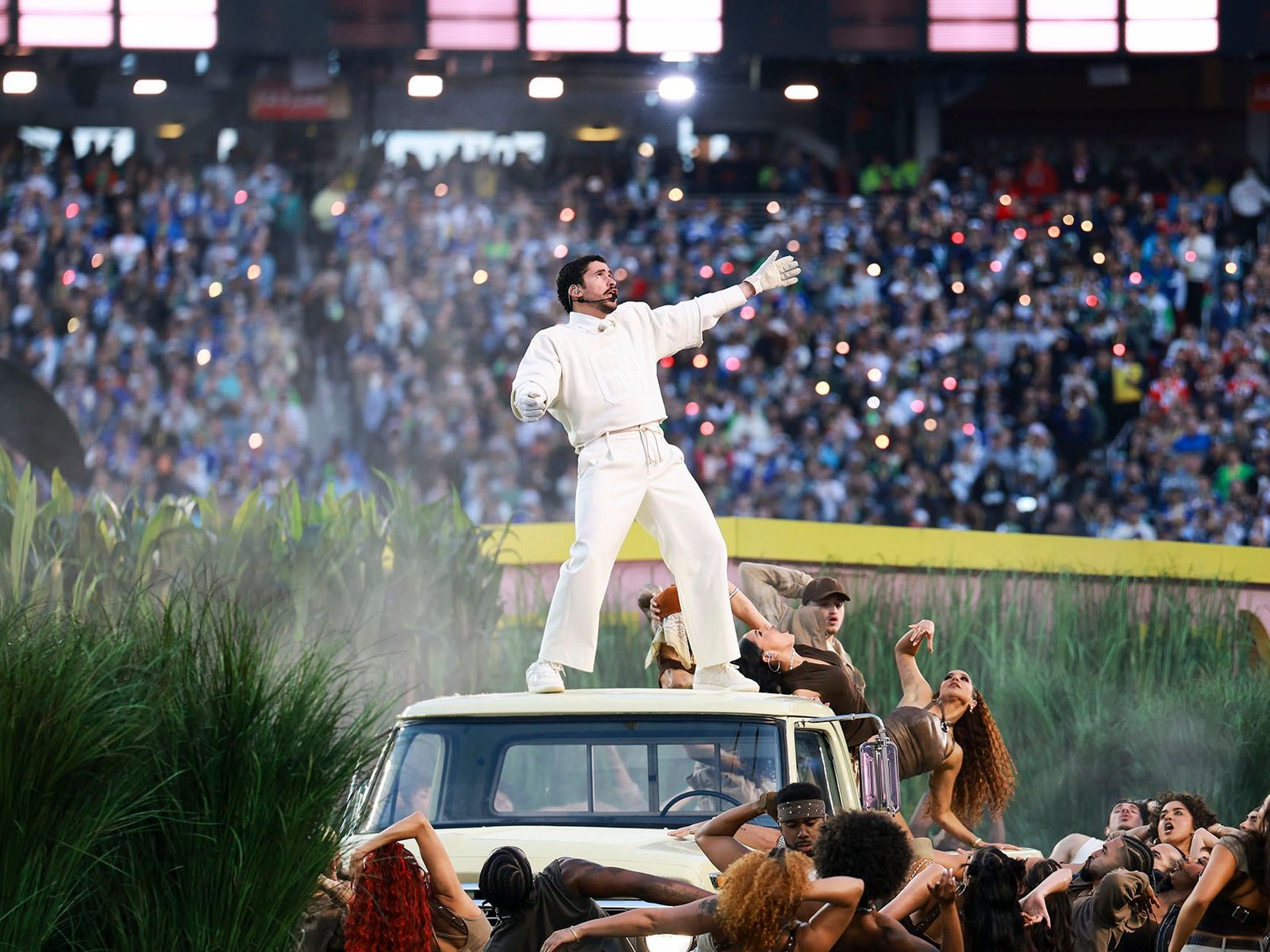
Why This Moment Meant More Than Music for Bad Bunny
For Bad Bunny, headlining the Super Bowl halftime show was never just another career milestone. It represented a historic moment for Latino music, language, and identity on the world’s biggest stage.
His rise has fundamentally reshaped the global music landscape. Bad Bunny has proven that Spanish-language music does not need translation, dilution, or compromise to dominate charts, tours, and streaming platforms worldwide.
Within that context, Drake’s reported decision carries deeper significance. Any appearance by Drake — regardless of intent — would have instantly shifted the narrative, redirecting focus away from the cultural weight of the moment.
Drake’s Decision: Respect Over Spotlight
According to reports, Drake declined the invitation because he did not want to take attention away from Bad Bunny’s performance. His presence alone would have introduced a parallel storyline, one capable of overshadowing the cultural meaning behind the show.
Rather than inserting himself into a moment already heavy with symbolism, Drake reportedly felt it deserved to exist on its own terms.
In an industry driven by visibility, dominance, and constant relevance, that level of restraint remains exceptionally rare.
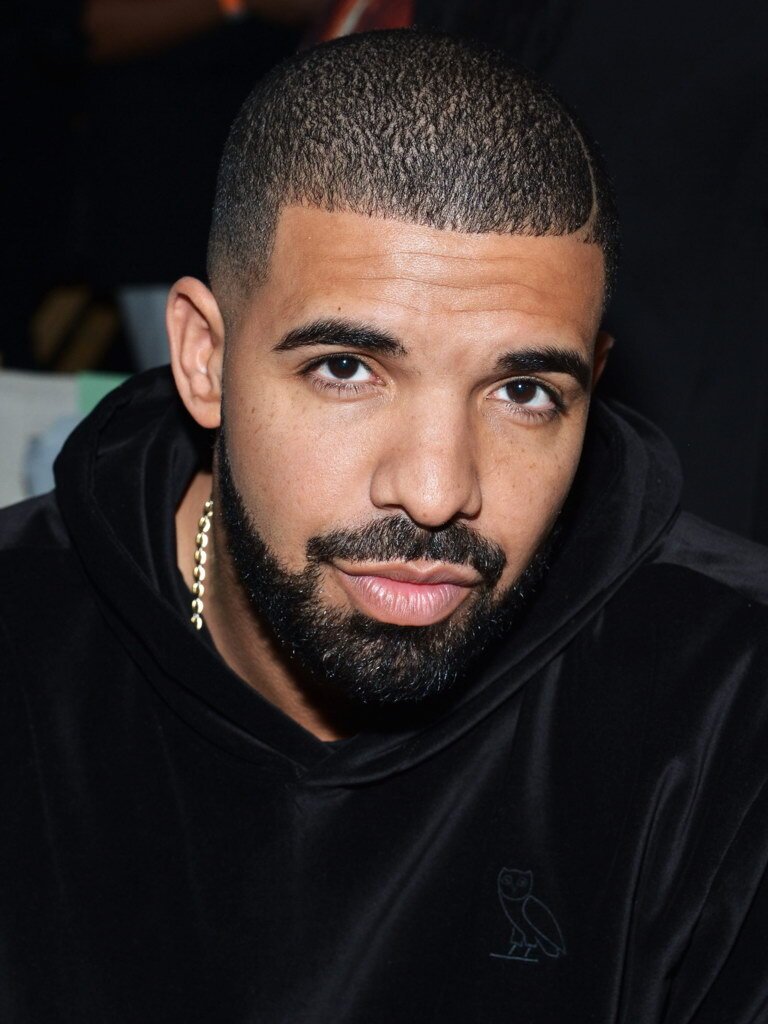
A Different Kind of Power Move
Power in modern music is often measured by presence — surprise appearances, unannounced features, and moments designed to dominate headlines. But influence can also be defined by knowing when not to appear.
By stepping aside, Drake allowed Bad Bunny’s performance to exist without distraction, shared narratives, or competing headlines.
For many fans, the decision reflected maturity, cultural awareness, and confidence rather than avoidance.
Respect or a Missed Opportunity?
Fan reactions were predictably divided. Some praised Drake for prioritizing respect and cultural ownership, calling the move thoughtful and necessary. Others argued that a Drake appearance could have produced one of the most iconic Super Bowl crossover moments in history.
The debate ultimately raised a deeper question: Is preserving cultural significance more important than chasing viral legacy?
Mutual Respect, Not Competition
This moment does not suggest tension between Drake and Bad Bunny. Instead, it highlights mutual respect between two artists who dominate global culture through entirely different lanes.
Both have reached international audiences without sacrificing identity or authenticity. Drake stepping aside was not a loss — it was an acknowledgment that some moments are bigger when they remain untouched.
Legacy Beyond the Moment
As the immediate reactions faded, Drake’s reported decision began to settle into a broader conversation about legacy. At this stage of his career, Drake no longer needs visibility to validate relevance. His catalog, influence, and cultural footprint are already deeply embedded in global music history.
By choosing absence over appearance, Drake reinforced a different kind of legacy — one rooted in confidence rather than constant confirmation. It suggested that true influence does not always require center stage, especially when the moment carries cultural meaning beyond individual achievement.
In many ways, the decision aligned with an artist who understands the difference between participation and preservation.
How This Decision Reflects Drake’s Career Evolution
Early in his career, Drake thrived on visibility — surprise features, headline moments, and constant presence across genres and platforms. That approach helped define his rise and establish him as one of the most dominant artists of his generation.
However, as his career matured, Drake’s relationship with the spotlight shifted. Strategic silence, selective appearances, and intentional restraint have become just as powerful as public dominance.
Declining the Super Bowl halftime invitation fits into that evolution. It reflects an artist who understands timing, cultural context, and the importance of letting certain moments belong entirely to others.
What This Means for Future Halftime Shows
The Super Bowl halftime show continues to evolve, and moments like this may influence how future performances are approached. Rather than relying heavily on surprise guest appearances, artists may prioritize narrative clarity and cultural ownership.
Bad Bunny’s performance demonstrated that a halftime show can stand powerfully on its own, without relying on external star power to validate its impact.
Drake’s absence unintentionally strengthened that message — proving that sometimes the most respectful collaboration is knowing when not to collaborate.
The Internet’s Role in Amplifying Absence
In the age of social media, absence itself becomes content. Drake not appearing sparked nearly as much discussion as an actual performance would have, highlighting how modern audiences analyze intent just as much as action.
Speculation, debate, and discourse transformed a quiet decision into a viral cultural moment — one fueled entirely by interpretation rather than spectacle.
This dynamic reflects the current media ecosystem, where meaning is constructed not only by what is shown, but by what is withheld.
Restraint as the New Flex
In an industry driven by numbers, moments, and dominance, restraint is becoming a rare form of power. Drake’s reported decision suggests that confidence is no longer about constant visibility — it is about intentional presence.
By allowing Bad Bunny to own the moment without shared headlines or divided narratives, Drake reinforced the idea that respect and awareness can coexist with global dominance.
It was not a retreat. It was a choice.
Why This Moment Will Age Well
Years from now, this decision may be remembered less as an absence and more as a turning point in how cultural moments are handled at the highest level.
Bad Bunny’s Super Bowl halftime show will stand as a defining moment for Latino representation. Drake’s decision ensured that the focus remained exactly where it was meant to be.
In hindsight, the absence may prove more powerful than any cameo could have been.
A Quiet Decision With Loud Impact
Not every cultural moment needs to be shared. Not every stage needs multiple stars. And not every power move requires a microphone.
Drake reportedly declining the Super Bowl halftime invitation was a quiet decision that echoed loudly across music culture — reminding audiences that sometimes the strongest statement is knowing when to step aside.
In an era obsessed with presence, restraint may be the ultimate flex.